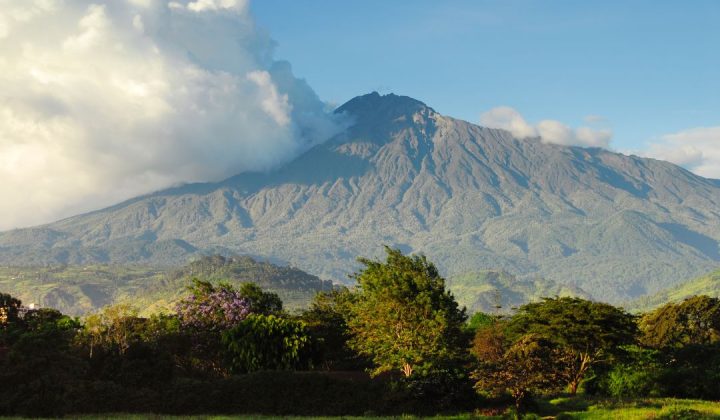
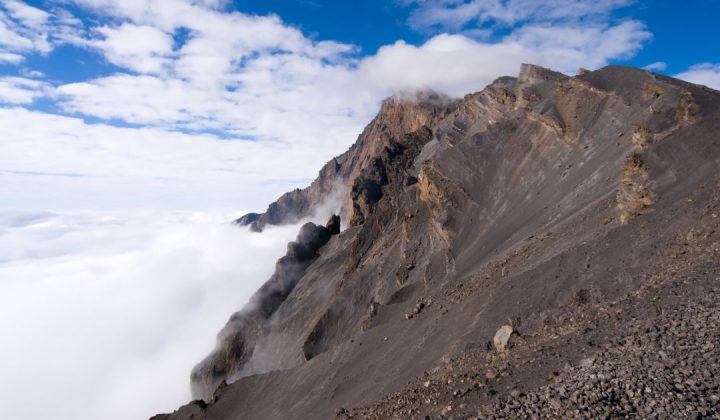
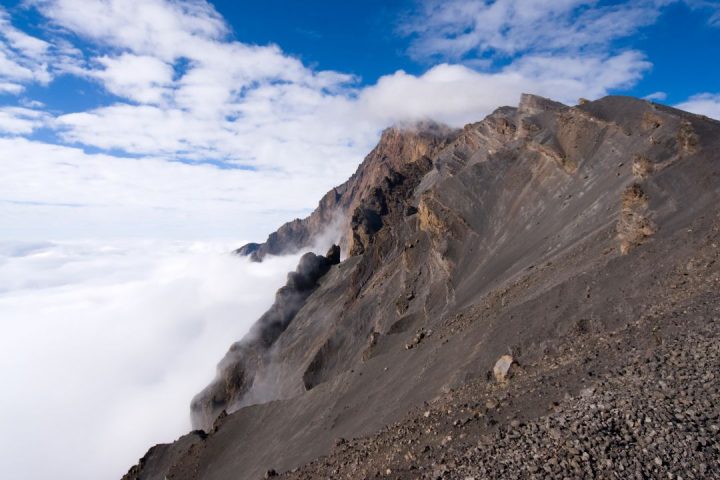
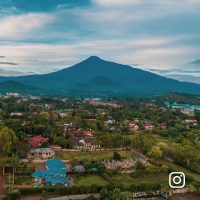
Mount Meru is Tanzania’s second-highest mountain, rising to 4,566 meters, and is located within Arusha National Park. Often overshadowed by Mount Kilimanjaro, Mount Meru offers a quieter, less crowded trekking experience with equally dramatic scenery. The mountain is a dormant stratovolcano featuring a spectacular crater, steep cliffs, and panoramic views of Kilimanjaro on clear days.
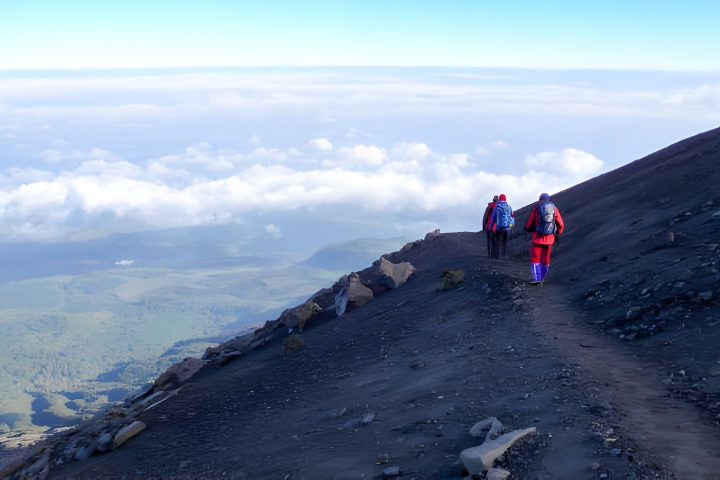
Mount Meru is considered an excellent acclimatization climb before attempting Kilimanjaro, but it is also a rewarding standalone adventure. Trekkers pass through lush forests, open moorlands, and rocky alpine terrain while encountering wildlife along the lower slopes, making it a unique combination of safari and mountain trekking.
Wildlife in Mount Meru
Unlike many mountain treks, Mount Meru offers excellent wildlife viewing in its lower forest zones. Because it lies inside Arusha National Park, hikers may see giraffes, buffaloes, bushbucks, warthogs, and even elephants at lower elevations. Armed rangers typically accompany trekkers due to the presence of wildlife.
The forest is also home to black-and-white colobus monkeys, blue monkeys, and diverse bird species. As climbers ascend, the landscape transitions into moorland and alpine desert, where wildlife becomes scarce but the scenery becomes increasingly dramatic.
Excursions and Activities
Summit Trek (3–4 Days): Climb to Socialist Peak (4,566m) for breathtaking sunrise views.
Acclimatization Climb: Ideal preparation before attempting Kilimanjaro.
Wildlife-Integrated Trekking: Experience animals in the lower forest zones.
Photography Tours: Capture crater cliffs and views of Mount Kilimanjaro.
Nature Walks in Arusha National Park: Short hikes for non-climbers.
Travel time to Mount Meru
From Arusha town: 30–45 minutes to Momella Gate
From Kilimanjaro International Airport: 1–1.5 hours
From Moshi: 1.5–2 hours
From Lake Manyara: 2–3 hours
Best Time to Visit Mount Meru
The best time to climb Mount Meru is during the dry seasons: June–October and January–February. These months offer clearer skies, safer trail conditions, and better summit visibility.
During the rainy seasons (March–May and November–December), trails can become slippery, especially in the forest zone. However, the mountain appears lush and green, and there are fewer climbers during this period.
Most Common Animals
Giraffes
Buffaloes
Bushbucks
Warthogs
Colobus monkeys
Blue monkeys
Forest birds
Facts about Arusha National Park
Second-highest mountain in Tanzania (4,566m)
Located within Arusha National Park
Dormant stratovolcano with dramatic crater
Summit is called Socialist Peak
Offers clear views of Mount Kilimanjaro on good days
Requires armed ranger escort due to wildlife presence

 Dutch
Dutch Spanish
 French
 Russian
 Chinese (Simplified)





 Nederlands
 Español
 Русский
 Français
 中文
中文